
Demand for EMS in Switzerland Grows Despite High Costs
The demand for EMS in Switzerland, one of the world’s richest countries, is steadily growing, despite the high cost and attempts from the state to develop more outpatient treatment options.
The authorities of many Swiss cantons (autonomous, semi-sovereign states within the larger nation) report an increased demand for EMS within their territories, reflected in the high number of ambulance calls per day.
According to representatives of local paramedics, more Swiss citizens are calling 1-4-4 directly instead of their family doctor. This increase started during the pandemic, and people continue to request quick medical help.
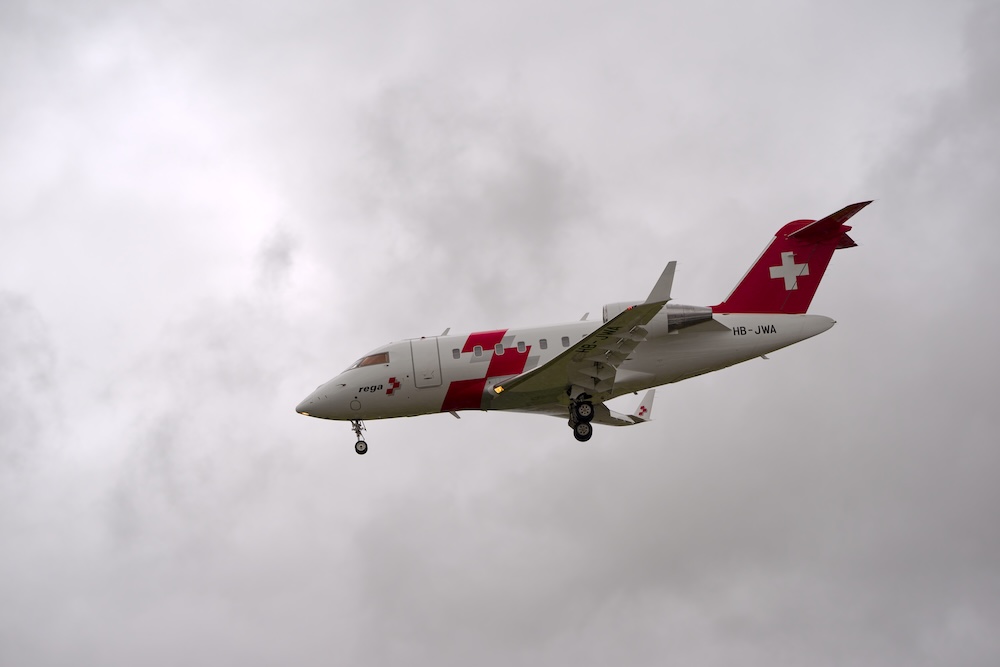
The increased demand is observed in many of the largest cities and cantons of the country—in both the German and French speaking parts of the country—such as Zurich, Linth, St.Gallen and some others. Paramedics of some Swiss cantons have reported that they are approaching the limits of their capacities.
A representatives of St. Gallen Rescue Medical Service said in an interview with Watson, that “explaining these high figures is not that easy.”
“On the one hand, we suspect that the aging population plays a role,” the representative said. “On the other hand, it could also have something to do with the fact that many people no longer have a family doctor and are more likely to dial 1-4-4 if they have acute health problems.”
The demand remains high despite a very high cost for EMS in Switzerland. Depending on the location and time of operation, the costs range from 832 francs (U.S. $1,059 as of March 23, 2026) for the cheapest EMS service to 1,881 francs ($1,504), with a night surcharge of $2,144 francs ($2,731), for the most expensive service.
Swiss paramedics also said about health uncertainty, which has increased among the local population since 2020, could play a role in the increased call volume. In the past, people only called the emergency services when it was almost too late, but in recent years the situation has changed. According to the St. Gallen representative, “in the past, people behaved differently when they had a fever or cough. Today there is a fear that one could have become infected with Covid. It’s quicker to dial 1-4-4.”
“We have worked for decades to eliminate people's fear of dialing 1-4-4. It would be wrong to advise against it again now,” the St. Gallen’s rep said.
In contrast to many other developed nations, the situation with staffing in EMS in Switzerland remains at generally good level. However, the situation may deteriorate if there isn’t reform. The ongoing growth of Swiss healthcare and the EMS system is considered a challenge for the country and its authorities, as this will require additional number of both emergency doctors and nursing staff. Numerous recent studies have shown that there are no reserves of highly skilled personnel in Switzerland, so there is a high possibility that the country may face with a shortage of EMS personnel as soon as this year.
That said, the hospital sector has seen some growth in recent years. The Swiss Federal Statistical Office, which is dedicated to hospital figures, reports the annual number employed personnel in the hospital sector of the country—including emergency departments—exceeds about 180,000 full-time positions. That's an increase of 12.8% since 2019. Hospital doctors and administration are among the areas that have grown the most, with an increase of 20% each. The increase in nursing staff is smaller at 8.5% over the same period.
The Swiss central government and the authorities of cantons are aware of the existing problems but don’t seem in a rush make major changes. Instead of dealing with possible personnel shortages, reform will primarily focus on financial aspects of operations of the Swiss national EMS and the issues of funding on both the central and canton levels.
According to Swiss media, in the heart of the reform will be more active replacement of inpatient treatment with outpatient treatment, which will reduce the cost pressure on the industry by about 3 billion francs annually ($3.8 billion). These plans also include reducing the number of hospitalizations in emergency departments and reducing the number of overnight stays in hospitals.
While the population of Switzerland increased by around 5% between 2015 and 2023, healthcare costs rose by 12%. The growth of costs could be also explained by rising incomes of local population, which, according to some Swiss economists leads to disproportionate growth of healthcare and EMS sectors of the country.
Local economists point out the country’s healthcare and EMS sector has remained labor-intensive compared to other industries. Additionally, according to the Association of Swiss Assistant and Senior Physicians (VSAO), the working hours of medical staff are decreasing, meaning more staff are needed to provide the same services.
Philipp Thüler from the VSAO said many local doctors are no longer willing to work 80 hours or more per week. To that end, the association requires a working week of 42 hours of service. However, many physicians and nurses work 56 hours per week, meaning the workload of hospital doctors in Switzerland is still far too high and ultimately illegal.